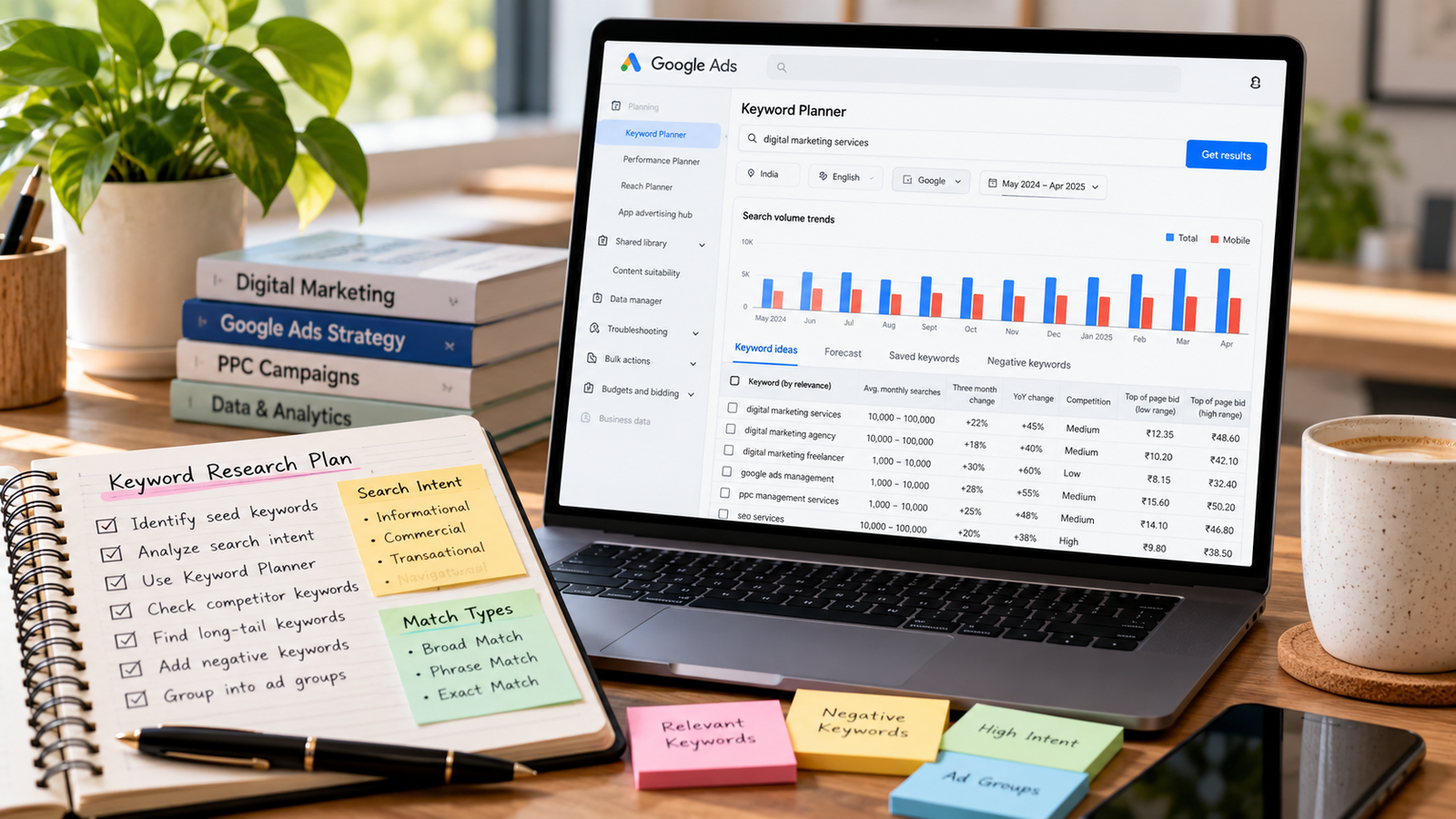
Running Google Ads can seem simple—choose some keywords, create an ad, set a budget, and wait for results. But getting consistent conversions requires much more than launching a campaign. This is where a Google Ads freelancer can help. A freelancer can manage your campaigns, improve targeting, test ads, monitor performance, and make data-driven changes to help you get more value from your advertising budget. What Does a Google Ads Freelancer Do? A Google Ads freelancer typically handles the complete campaign process, from planning to optimization. 1. Keyword Research They identify relevant search terms your potential customers are actually using and organize them based on search intent. 2. Campaign Setup A well-structured campaign separates keywords, ads, and audiences into relevant groups. This makes campaigns easier to manage and optimize. 3. Ad Creation and Testing A freelancer writes different versions of ad copy and tests headlines, descriptions, calls to action, and messaging to understand what attracts qualified clicks. 4. Conversion Tracking Clicks alone don’t tell you whether your campaigns are working. Conversion tracking helps measure actions such as form submissions, calls, purchases, or enquiries. 5. Campaign Optimization Google Ads campaigns need regular attention. Search terms, bids, keywords, ads, budgets, and conversion data can all be reviewed to identify opportunities for improvement. Google Ads Freelancer vs Agency A freelancer and an agency can both manage Google Ads, but the working experience can be different. A freelancer often provides direct communication and a more focused approach, while an agency may have a larger team handling different areas of marketing. The right choice depends on your business goals, campaign complexity, budget, and the level of support you need. What Should You Look for in a Google Ads Freelancer? Before hiring someone, look beyond simply asking whether they can run ads. Consider their experience with: Keyword research and campaign structure Conversion tracking Ad testing and optimization Landing page performance Google Ads reporting and analytics Most importantly, look for someone who understands your business goals, not just the advertising platform.
Google Ads: A Complete Guide to Running Successful PPC Campaigns
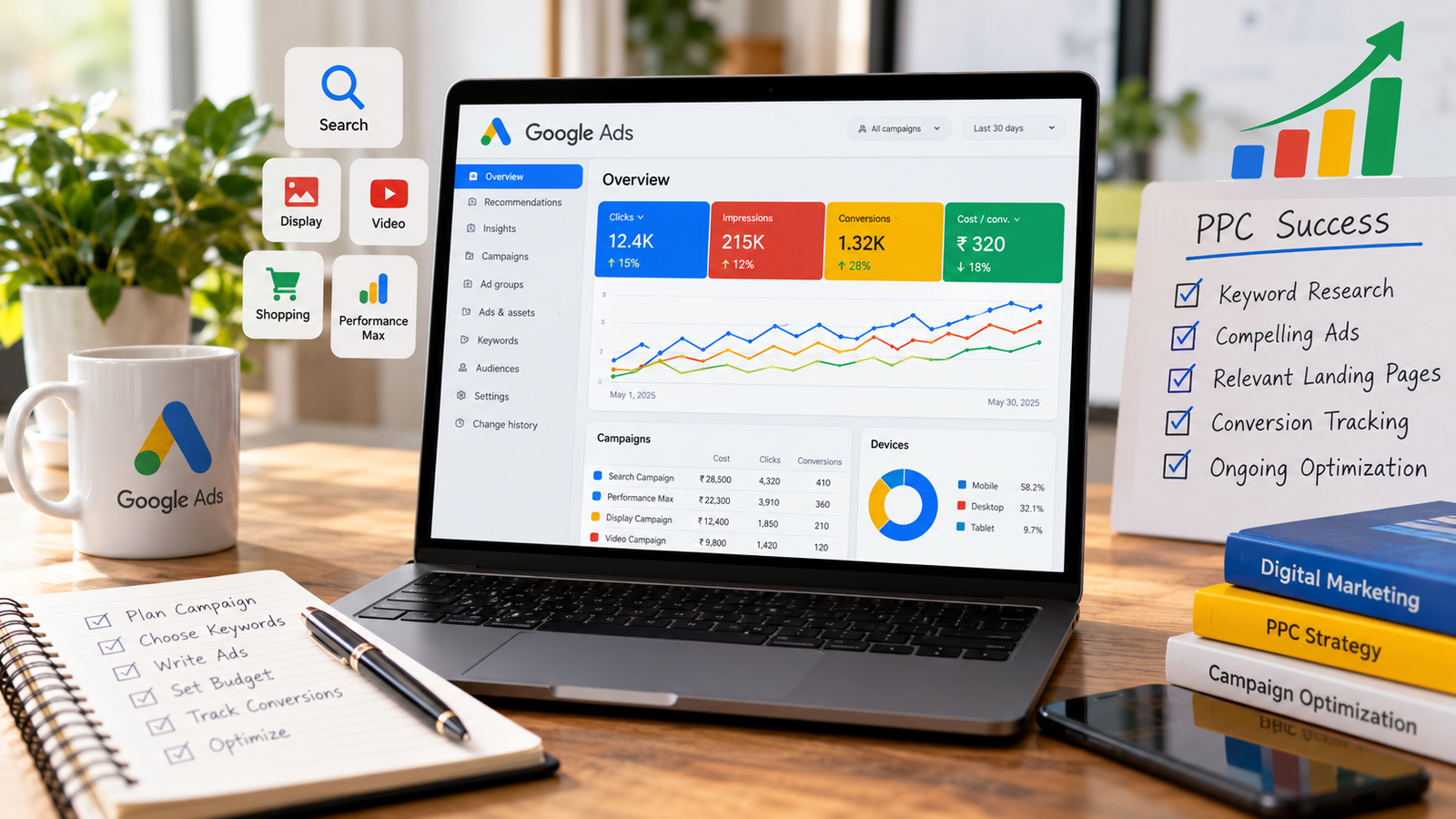
Imagine this. Someone opens Google and types: “best digital marketing freelancer in Bangalore” They already have a problem. They are looking for a solution. And they may be ready to contact someone. At that exact moment, a business has an opportunity to appear in front of them through Google Ads. That is what makes paid search different from many traditional forms of advertising. Instead of interrupting someone who may or may not be interested, you can reach people based on what they are actively searching for. But there is a catch. Running Google Ads is easy. Running Google Ads profitably is not. Creating a campaign, choosing a few keywords and setting a daily budget is only the beginning. A successful PPC campaign requires a connected strategy involving keyword research, search intent, ad copy, campaign structure, landing pages, conversion tracking and continuous optimization. This guide explains how Google Ads works, how to build a campaign from the ground up, what mistakes to avoid and how to turn paid search into a measurable marketing channel. What Is Google Ads? How Does Google Ads Work? Google Ads is Google’s online advertising platform that allows businesses to promote their products and services across Google’s advertising network. Depending on the campaign type, ads can appear on Google Search, YouTube, websites, apps, Maps, and other Google properties. For example, a digital marketing freelancer could target searches such as: Google Ads freelancer Google Ads management services PPC consultant Bangalore Google Ads expert When someone searches for a relevant term, eligible advertisements can enter Google’s ad auction. Google Ads works through an advertising auction that determines which eligible ads can appear and where. A simple Google Ads journey looks like this: Search → Keyword → Ad Auction → Advertisement → Click → Landing Page → Conversion Types of Google Ads Campaigns Google Ads offers different campaign types for different marketing objectives. Search Campaigns Search campaigns allow businesses to show text ads when people search for relevant products or services. They’re particularly useful for businesses looking to capture existing search demand and generate leads or sales. Performance Max Performance Max allows advertisers to access multiple Google advertising channels through a single campaign and uses automation to optimize toward campaign goals. Display Campaigns Display campaigns use visual ads across eligible websites and apps. They’re commonly used for awareness, promotion, and remarketing. Shopping Campaigns Shopping campaigns are designed primarily for ecommerce businesses and can display product information such as images, prices, and product names. Video Campaigns Video campaigns help businesses reach audiences through video advertising, including YouTube. The right campaign type depends on your business goal, audience, customer journey, and available assets. Why Keyword Research Matters Keywords are the foundation of a Search campaign, but choosing keywords isn’t simply about finding phrases with high search volume. You also need to understand search intent. For example: “What is Google Ads?” is primarily informational. But: “Google Ads management services Bangalore” has much stronger commercial intent. If you’re selling Google Ads management, the second search is likely more relevant to your business. That’s why effective keyword research considers: Relevance Search intent Competition Cost Commercial value Conversion potential Building a Well-Structured Google Ads Campaign Once you’ve identified your keywords, organize them into logical campaigns and ad groups. For example: Campaign: Google Ads Services → Ad Group: Google Ads Management → Keywords: Google Ads management, Google Ads management services → Relevant advertisements → Relevant landing page This creates a stronger connection between what the user searches for, what they see in your advertisement, and what they find after clicking. How to Optimize Google Ads Campaigns Launching a campaign isn’t the end. It’s the beginning of the optimization process. Regularly review your campaign to understand: Which searches are triggering your ads Which keywords generate conversions Which searches are irrelevant Which advertisements perform better Whether your landing page converts visitors Where your budget is being wasted Common Google Ads Mistakes to Avoid Even a well-funded campaign can struggle if the fundamentals aren’t right. Choosing irrelevant keywords High search volume doesn’t matter if the search isn’t relevant to your business. Ignoring negative keywords Irrelevant searches can consume your advertising budget. Using generic ad copy Your advertisement should clearly communicate what you offer and why it matters. Sending everyone to the homepage A focused landing page can provide a much more relevant experience. Tracking only clicks Clicks don’t necessarily mean customers. Not optimizing after launch Campaign performance can change, and search-term data can reveal new opportunities and problems.
Best ways to do Digital Marketing
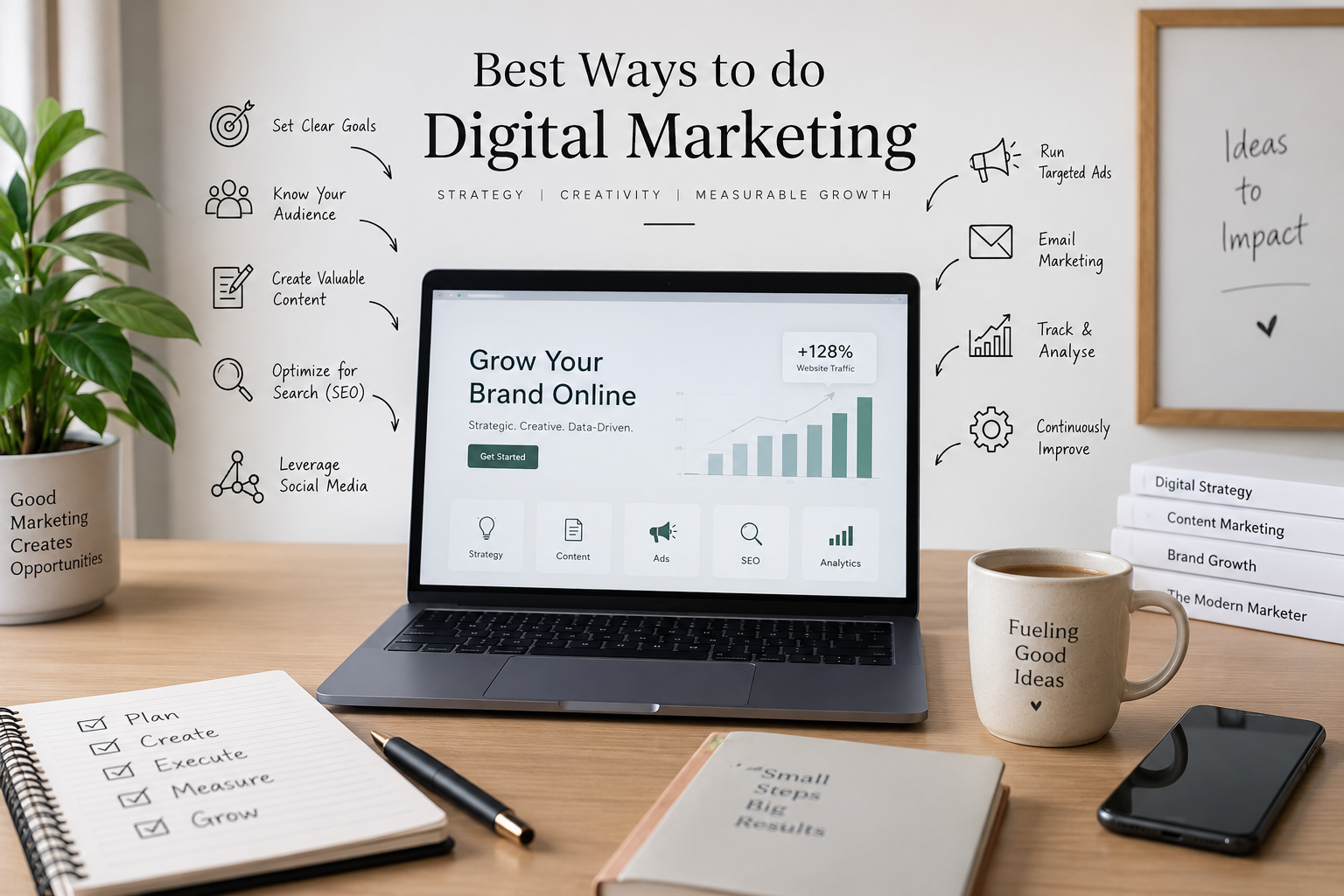
Digital marketing has become an essential part of growing a business online. Whether you are a small business, startup, personal brand, or established company, the right digital marketing strategy can help you reach the right audience, build trust, generate leads, and increase sales. But digital marketing is not just about posting on social media or running advertisements. The best results come from combining different channels and continuously improving your strategy based on data. Here are some of the most effective ways to do digital marketing in 2026. 1. Focus on SEO Search Engine Optimization (SEO) helps your website appear when potential customers search for products, services, or information related to your business. A strong SEO strategy includes: Keyword research On-page SEO Technical SEO Quality content Internal linking Website speed and user experience Local SEO The goal is not simply to get more website visitors. It is to attract relevant visitors who are more likely to become customers.